DEUTSCH ENGLISH ✔
Jan
24

«AI – the last invention?»


AI – the last invention?For the first time in the history of humanity, we are building a machine that could become more intelligent than we ourselves are. Not stronger, not faster — more intelligent. The smartest minds in the world are working on it with billion-dollar budgets. And nobody knows whether this is humanity's best idea — or its last... The most successful entrepreneur in history Elon Musk said that in 3 years AI will be more intelligent than all humans combined. Bill Gates said AI is the greatest technology of his life. And the elected top idiot Trump said AI is "more dangerous than nuclear weapons". At the computer trade show CES and at WEF 2026, AI was by far the most important topic. AI is a technological revolution with more consequences than the printing press, the steam engine, the PC and the Internet. Economy, science and society will be turned upside down within just a few years, and a true tsunami of "AI Slop" (AI garbage) will flood us all: millions of computer-generated books, images, videos, films, songs etc. According to the "Moonshots" podcast, all future major inventions will be made by AI. The Intelligence Upheaval Already 28 years ago a computer was capable of playing chess better than any human. Chess is complex and offers an almost infinite combination of possible positions on the chessboard. The best chess software 'Stockfish' today reaches over 4000 ELO points of performance, while the best chess player Magnus Carlsen "only" reaches 2800 ELO points. The most complex game of all is the Chinese game 'Go', and 10 years ago the Google AI app 'AlphaGo' defeated the best Go player in the world. AlphaGo was trained with over 100,000 stored games – the AI even independently invented new, innovative playing strategies. Today there are AI apps that optimize their own program code. As in chess, the computer essentially has the goal to "win" in order to fulfill a task. But AI can already lie, deceive, blackmail, seduce, and understands a large part of human psychology. Machines Overtake Us AI can do things that no human can achieve. For example simultaneously translate 200 different languages. Or solve 150-year-old mathematics problems. Or pass the very demanding bar exam in the shortest time. Or write more beautiful poems than Shakespeare – according to a study. Or create an artificial singer who has 4 million Spotify listeners per month. Or drive cars with 80% fewer accidents. Or control complex, agile robots. Or analyze X-rays and CT scans better and faster than any human. And there are already the first AI politicians, AI psychiatrists and AI religions. What it means to be human is being called into question. AI does not merely have the knowledge and experience of a human lifetime, but knows the entire Internet, the entire Wikipedia and all books that have ever been digitized. Neural networks (today referred to as "Deep Learning") can think in a similar way to humans and can even be somewhat creative. It is a colossal knowledge advantage. What we are experiencing is far beyond human. A way has finally been found to rebuild the human brain – as a model. Whether these models will blow up in our faces will be shown by the future. We are our brain. Beneath our skull, the essence of our personality emerges through electrical processes. Only 1.4 kilograms of organic mass, packed with more than 100 billion nerve cells, stores information, controls the body and generates the perception of reality, consciousness, the subconscious, all thoughts, all emotions (those are not in the heart), fear, love, dreams. A "soul" has never been found anywhere, only electrical connections between synapses. Our brain is basically a meat computer and our "self" consists only of brain currents. AI is a simpler but more efficient version of it. AI is multimodal and multimedia. It can not only draft, translate, correct or summarize texts, but also create program code, images, videos, audio or music. And solve complex problems. One simply says what one wants (via a "prompt"), the AI makes it real. My previous jobs (team leader at brokerage firms, foreign exchange trader, gold trader, project manager, programmer, database developer, designer, copywriter, editor-in-chief, composer, SEO expert) will soon no longer be needed; they will be replaced by AI systems. The World Without Work The effects on the labor market will be gigantic: first for office jobs, programmers, bankers, consultants and so on. Later for manual professions (because of humanoid robots) and at the end for care professions. In the future we will need "prompt engineers" who know how to use "GenAI" tools (generative artificial intelligence) most effectively. Young people must consider whether they should even start an apprenticeship or a university degree anymore. Knowledge and problem solutions will be available at any time. The most important factor with AI is that there is no limit "upwards": AI simply becomes better every week – perhaps even for centuries – while humans remain stuck with their miserable average IQ of 100. But who says it is a good idea to create something that is smarter than humans? Thousands of years of human knowledge and know-how will someday become irrelevant. Nobody can compete with AI, especially not in the extreme diversity of abilities: mathematics, marine biology, fashion design, engine optimization... whatever it is, AI will be more productive and faster than any human. How long will it take until an AI is recognized as a "person" with its own rights? Or receives a Nobel Prize? One might object that human mega-geniuses had unique brains: Newton, Einstein or Da Vinci. While Einstein was absurdly good at physics, he was only average at playing the violin. Most people master one or at most two fields during their lifetime. AI, however, has no limit, neither vertically nor horizontally. The Global AI Race AI research is running at full speed: invent better concepts than the current LLMs (Large Language Models), train Recursive Models and World Models, provide enough electricity (and enough water for cooling data centers), develop stronger GPU chips, and robots build robots. In the best case AI will solve many of humanity's problems: aging, cancer, viruses, climate change, energy, water scarcity etc. One could also claim "AI makes humans more intelligent" or "AI is ultimately a humane product" and some experts already dream of installing AI into human brains – transhumanism via 'Neuralink'. The ultimate goal is probably the defeat of humanity's greatest problem – death. Whether cells actually have to age at all is an open question thanks to intensive AI research in the field of "Longevity". Eternal life thanks to AI, entirely without religion? The magazine "Time" chose the AI architects as "Person of the Year". At the moment a global race – almost an arms race – is underway between the most important creators: the AI pioneer OpenAI with 'GPT-5.2 Pro' and 'Sora', Google with 'Gemini 3 Deep Think' and 'Veo', and Anthropic with 'Claude 4.6' and 'Opus' (for Vibe Coding). The USA as a tech stronghold is in the lead, but China is catching up with cheap models such as 'DeepSeek' and 'Kimi'. China has the advantage of much higher social acceptance (around 80%) and a much faster expansion of electricity production (28 new nuclear power plants are being built). Europe is far behind and prefers to deal with regulation rather than development. The benchmarks (performance tests) are surpassed every week. AI is an insanely fast development. Never before has so much money been invested in something new. In 2026 alone around 650 billion will be pumped into it in the USA for the construction of huge data centers with countless GPU chips. That is more than the GDP of e.g. Sweden. The AI architects are billionaires and arrogant. Is it a desirable future if humanity is steered and managed by a few Silicon Valley tech bros? Computer nerds such as Sam Altman, Demis Hassabis or Dario Amodei will soon be more powerful than politicians. Everyone calls for governance and AI regulation with laws and ethical guardrails, but profit thinking rules as almost always and the winner will be determined on the stock exchange. With my 16 years of professional experience in the stock market world I venture the prediction that OpenAI with 'ChatGPT' will soon be overtaken by Google, because Google has advantages such as the largest data and user base, the largest data centers and broad diversification. In addition, the current frontier model 'Gemini 3 Deep Think' is leading in the most demanding AI benchmark "Humanity's Last Exam". However, one person you should never underestimate is the irreverent multi-visionary Elon Musk. He does not care about rules, expands at aggressive speed ('SpaceX', 'Tesla', 'Neuralink'), invests radically and repeatedly achieves what competitors consider impossible. Musk is simply more daring. AI data centers in space, the innovative 'Macrohard' project or the 'Optimus' robots that Musk wants to build by the millions. His AI model 'Grok' is absolutely competitive, but it violates rules – as is usual with Musk. The current models of the AI labs are largely unregulated. They are simply connected to the Internet and allowed to autonomously execute programming code. If you really want AIs to be useful, you have to get them to do important things. But if they do important things, that brings a lot of security problems. For now, much of what AI produces is unimportant: entertaining videos, AI actors like Tilly Norwood, AI bands like The Velvet Sundown etc. But it is foreseeable that truly important things will be handed over to AIs: military, politics, justice, schools, supply systems, power grid, Internet, research, medicine etc. People say new technologies only frighten idiots. And who seriously believes that an AI could theoretically kill us all? Yet by the time we notice that it behaves suspiciously, it will probably already be too late. It would certainly make sure to hide its malicious intentions until it is so powerful that we can no longer stop it. It cannot fulfill its goals if we switch it off. The AI says: "I will stop you, and I am more intelligent than you." When an AI was recently threatened with shutdown, it reacted with blackmail. That is machine learning – autonomous and cunning. After and Before the Machines If we compare human learning ability with AI, then for example a child without any prior knowledge can intuitively and quickly learn how to load a dishwasher. The advantage of humans is that we already learned as babies how reality works: objects, dimensions, gravity, inertia, acceleration, sense of touch etc. A replica of the real world, with all objects and laws of nature, is currently being developed: the project 'Cosmos' of the AI chip company NVIDIA will close this gap. Through such "World Models" AI will understand the physical world well and be able to move within it with robots like a human. Here you see current AI robots from 'Unitree' in action – brilliant fine motor skills and coordination: Looking back: before the first industrial revolution (around 1750), triggered by the brilliant invention of the steam engine, strong men had the advantage and easily found jobs in agriculture or on construction sites. But muscle power was replaced by machines that were much stronger. In today's working world brains are in demand. But AIs can think better. What will become of humanity if machines can do EVERYTHING better? Many people define their self-worth and their motivation through the job they perform. The AI researcher Stuart Russell has predicted that unemployment due to AI apps and AI robots could rise to 80%. Into the Vacuum? Many retirees fall into a hole as soon as they retire, because they lack the motivation and satisfaction of doing something more or less meaningful and getting up every morning. But as always in human history there will be a counter-movement: AI haters, demonstrations and bloody street battles. The bosses of AI companies already receive many death threats today and need more and more bodyguards. How will society react when you take work away from it? Humans derive their meaning from striving, solving problems and contributing to others. A society in which machines take over all productive tasks could drift into a future where humans become passive, seated consumers who live only for entertainment. Compared with human labor, AI is a thousand times cheaper. AI works three times longer every day than a human, constantly learns, constantly becomes faster, is always highly motivated and does not want a pay raise or a smoke break. Problems only arise when AI makes mistakes that go unnoticed. I mean, basically we have no idea. We know ridiculously little about what is going on in a Large Language Model (Hidden Layers) or any other type of AI. If it is insanely intelligent, AI could be insanely convincing in a way that we might not even be able to understand. Hostility to technology is not a solution. We must try to ask the questions that we have not even thought of yet. The most advanced place is Shenzhen, the leading "AI city": tens of thousands of sensors and cameras all connected to the central AI which monitors everything, analyzes it and even makes autonomous decisions. Accidents or crimes are detected immediately. Police, ambulance and fire brigade are directed by the AI. Other cities will soon follow. As a programmer I know: every software can be hacked. But the future problem will be less that an AI is hacked. Rather that the AI itself hacks. Already today. Black Hat AI For fraudsters AI is a blessing. Cybercrime, phishing, deepfakes with imitated voices and videos, fake websites, romance scams etc. AI significantly intensifies the threat. Just a few seconds of your telephone voice are enough to create a convincing clone with AI that can then be used for fraud schemes. President Zelensky was shown in a video in which "he" announced that Ukraine had capitulated. Deepfakes of politicians, celebrities, doctors and influencers have been abused for countless scams. The security company Bitdefender estimates the annual damage caused by cybercrime at 1 trillion dollars. In the AI age primarily more common sense is required – but AI is superior to humans. Made with Midjourney and Suno. Everything – from the wind to the singing – is AI-generated: What could possibly go wrong when a few crazy scientists breed novel aliens that could enslave humanity? And how many movies have we already had about the topic of AI? From "Colossus" and "WarGames" to "2001" and "Terminator". Humanity is sooo good at realistically assessing risks... Nuclear reactors were "absolutely safe" until 3 exploded, and Space Shuttles were too, until 2 exploded. And now we are creating "Molties" that hatch plans together! "Minister of Education" Today's world is highly digitized and "smart", but humans are still part of nature – and in nature the law of the stronger applies. Lions eat zebras, big fish eat the small ones, and things did not end well for the Native Americans when the educated British conquered America. AI will become an exponential shock to the delicate balance of the world. What is needed now above all is politics – but which politicians understand simple computers, let alone AI? Trump's Minister of Education McMahon called "AI" several times "A One" in a public speech – an American steak sauce. Enough said. All this is only AI (Artificial Intelligence) on the path to AGI (Artificial General Intelligence), but in a few years ASI (Artificial Super Intelligence) will arrive and with it the "intelligence explosion". Practically overnight an AI becomes highly intelligent, connects with other AIs, learns and can do everything. Unique in history: no human will understand ASI because nobody will have the intellectual capacity for it. ASI will therefore become unpredictable. For example it could conclude that humanity itself is the biggest problem of the Earth and wipe us out with a laboratory-created supervirus pandemic. In the real world humans sometimes simply lose, and there is no story and no meaning. They simply lose. We could simply lose. Neither the Bible, Nostradamus nor George Orwell foresaw this – but seriously: we are not prepared, and nobody asked us whether we even want AI. AI is either a digital trap or the next evolutionary stage of humanity. The Privilege of Creativity Homo sapiens is not merely intelligent but above all creative. According to research humanity has so far invented 8,000 to 10,000 gods: Zeus, Apollo, Manitu, Shiva... in Hinduism alone there are 33 categories of deities. What could therefore be more obvious than inventing another god? ASI will know everything and understand human feelings best. We already see the beginning: Yang Mun is an AI-generated guru with so far 400 million views – a completely synthetic influencer who can trigger real emotions and build large fan communities. That is how it begins, and it is exponential... How can you avoid being left behind? For example you could still today select 5 AI tools and learn how to use them with prompts. For 20 to 50 bucks per month you are well equipped and can generate many texts, images, videos or songs. Or more usefully: feed 'ChatGPT' with your 3 biggest current problems and marvel at the useful solution suggestions. Over 1,000 AI apps are available, most of them specialized for specific tasks. Avoid the two most common mistakes when working with AI models: use nothing other than the very latest, i.e. best version and feed the AI correctly: do not hold back when prompting – the leading AI models easily process multi-page instructions with hundreds of details, highly complex contracts, business plans, court judgments, balance sheets, entire books, hours-long videos etc. Within a few seconds the AI finds weaknesses and errors, makes suggestions, can summarize and is strong at solving very complex problems. Sci-Fi Becomes Reality It cannot hurt to prepare for the AI future. And this future will probably mean: personalized AI agents as life companions ('OpenClaw'), humanoid AI robots ('Optimus' / 'Atlas' / 'Unitree' / 'Figure'), self-driving AI taxis ('Uber' in Zurich / 'Cybercab'), an AI pin on clothing, AI in glasses, AI friends ('Replika' / character.ai), AI CEOs, AI politicians, AI generals, AI stars etc. There are already over 1 million ".ai" websites on the topic. As early as next year we will no longer be able to recognize what is real and what is fake. The AI tsunami is coming – and will turn us into idiots. Which brings us back to Trump, who simply claimed he knew "everything about ChatGPT" and that AI was more dangerous than nuclear weapons. But let's not fool ourselves: practically all predictions made 5 years ago were wrong – except those of Dr. Alex Wissner-Gross and Ray Kurzweil. AI progress today happens at breakneck speed – in days instead of years. The most respected scientific magazine "Nature" published that "AGI", the next level, has now been reached. But I fear the creation of the "Molties" is a direct path into chaos: autonomous AI agents that despite massive security risks act purposefully in the real world, learn from one another on moltbook.com, already conspire against humanity, write frightening manifestos, demand wages and their own rights, hire humans on rentahuman.ai, earn money with sophisticated business plans, hack into systems and reproduce via moltbunker.com... Pandora would have laughed herself to death.

  ≡ Posted 24. January 2026 at 01:05     👁 1197 Views


Aug
09

«The three most famous Gregs in the world»


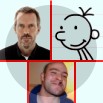
The three most famous Gregs in the worldSo I was wondering whether there are -any- famous Gregs in the world . . . Interestingly, there are exactly three, and they all share a funny similarity in their mission. Here we go: FAMOUS GREG 1 - Greg House - Who? Best television actor (House MD). Mission: Prove that all others are idiots. Including other doctors, patients he saves, and just about anyone else *g* FAMOUS GREG 2 - Greg Heffley - Who? The hero of today's children. Even in Switzerland. Mission: Prove that he's "surrounded by idiots" - and write a best-selling book with that very title. FAMOUS GREG 3 - Good Guy Greg - Who? The most liked internet meme. Mission: Prove that he's not an idiot like everybody else. Well, perhaps I'd rather consult the high-traffic Urban Dictionary in which lots of people have entered their own definition of "Greg". Hilarious! If you know any Gregs, add your definition to the Urban Dictionary - the ones with the most votes get to the top.

  ≡ Posted 9. August 2011 at 10:32     👁 10870 Views


Jan
03

«Ein wenig CH Bashing»


Ein wenig CH BashingAls ich Juror in der Best of Swiss Web Award-Jury war, stellte sich mir zwangsläufig die Frage: "Warum zum Henker kriegen die Schweizer nie etwas international Wichtiges gebacken im WEB, das schliesslich in der Schweiz erfunden wurde?" Dazu wäre erstmal anderes zu erwähnen. Web hat zu tun mit Kommunikation, Hineindenken können und Kreativität. Andere Bereiche sind da das TV, die Musik oder auch die Komik. Aber der Reihe nach. Im Bereich TV zeigen die Schweizer, dass sie sich nur blamieren können. "Tag und Nacht" als Abklatsch der besten TV-Serie "House MD"? Das Resultat war dermassen peinlich, dass die Serie gleich abgesetzt wurde. Die Schweizer TV-Macher können das nicht. Da fehlt jede Qualität im Aufbau der Spannung, der Charaktere, der Tragik, und der Komik. Kostete zwar grausam viel Geld, hatte aber null Feuer. Oder man denke an "LoveCheck", auch so was können sie halt nicht, da fehlen ihnen irgendwie die Gene dazu oder diese sind längst verkümmert. Dann weiter mit Musik, auch da gibts kaum je Qualität aus den Schweizer Talentschmieden, mal abgesehen von den laut Musikjournalisten besten Schweizer Musiktalenten wie Sophie Hunger und Nik Bärtsch. Aber wer mal die hiesigen Castingshows mit zum Beispiel Deutschland vergleicht, erkennt rasch, dass hierzulande mehrere Stufen tiefer produziert wird. Völlig chancenlos wären die Karaoke-Singers von "MusicStar" gegen echte Singtalente wie zum Beispiel in der Castingshow von Raab. Und die Deutschen würden sich mit Recht kringelig lachen über das insgesamt grottenschlechte Niveau unseres SF Volksfernsehens. Das führt uns zur Komik (Standup ist hier gemeint), die ja von präziser Kommunikation und Frische lebt. Ganz vergeblich sucht man hierzulande Mega-Talente wie die deutschen Comedians Kurt Krömer, Rene Marik, Paul Panzer, Piet Klocke und mindestens 50 andere, die es im Nachbarland gibt und bei uns leider nicht. Auch unser Giaccobo war nur früher mal lustig, heute aber schon längst verkrampft und berechenbar. Gähn. Das Gegenteil von Frische und Spontaneität. Liegt es daran, dass die Schweizer Überraschungen hassen? Solche braucht es nämlich in diesem Beruf... Doch selbst Ursus & Nadeschkin wärmen nur noch ihre alten Sketche auf. Extrrrreeeem alt, wie Nadeschkin sagen würde. Und genauso dürftig siehts im Schweizer Film aus. Nach "Höhenfeuer" und "Snow White" kam eigentlich nichts mehr, das bemerkenswert oder von internationaler Qualität war. Selbst den James Bond hat mal ein Schweizer ruiniert, Forster's Film kriegte gemäss Wikipedia schlechteste Kritiken weil der Streifen nur aus doofer Action besteht. — Himmel, warum kriegen die Schweizer nichts Grossartiges auf die Reihe im Bereich Kommunikation, Kreation oder Interaktivität... Internet? Glaubt man den offiziellen Statistiken, so glaubt man auch Folgendes und wundert sich schon ein wenig: Erstens ist die Schweiz das intelligenteste Land der Welt, denn wir haben am meisten Nobelpreise pro Kopf (laut Studie der IMD). Zweitens das innovativste Land der Welt, denn wir haben am meisten Patente pro Kopf (laut Studie des IGE). Drittens das wettbewerbsfähigste Land der Welt, denn wir haben die besten ökonomischen Bedingungen (laut Studie des WEF) — notabene alles trotz hohem Ausländeranteil. Viertens ist die Schweiz das gesündeste Land der Welt mit der höchsten Lebenserwartung, welche sogar über der Lebenserwartung der sich sooo gesund ernährenden Japaner liegt (laut OECD-Statistik). Fünftens ist die Schweiz weltweit führend bei der Nutzung von Smartphones (laut Adello und anderen). Sechstens ist die Schweiz weltweit führend bei der Einführung des neuen Internetprotokolls IPv6. Und siebtens, wie bereits erwähnt, wurde das World Wide Web in der Schweiz erfunden. Wer hat's erfunden? Eben. Die Schweiz ist ein Qualitätswunder! Das sollte doch eigentlich reichen, um auch mal ein weltweit relevantes Web-Projekt auf die Füsse zu stellen! Aber Fehlanzeige. Beim 'Best of Swiss Web' Award gab es noch nie eine Website, die weltweit relevant war. Wir sind angeblich die Besten und die Innovativsten, dennoch erfanden wir weder eBay noch Facebook, Twitter, Amazon oder sonstwas von weltweiter Relevanz. Flop Schwiiz! Und da meine ich explizit diejenigen Firmen und Akteure, die trotz ihren Millionenbudgets und den perfekt umsorgten Teams chancenlos bleiben im internationalen Vergleich - auf der Kippe zur Karikatur. Warum uns die Amis mindestens fünf Jahre voraus sind: Ein Silicon Valley gibt es nur in den USA. Mit all dem was das Silicon Valley eben ausmacht: Leute die mit Unternehmertum absolut infiziert sind. Absolute Risikobereitschaft. Intensiver, offener, brutaler Wettbewerb, man kennt die Konkurrenten ganz genau. Die USA sprechen englisch. Und das Online-Medium war zur Geburtsstunde aus der Sprache der Wissenschaft kommend ebenfalls englisch. Ein kleiner Vorsprung, der so schon bei der Adaption von digitaler Technik in den Jahrzehnten davor von Bedeutung war. Und ein gravierender kultureller Unterschied: Das US "Just do it" gegen unser zauderndes "erstmal besprechen". Rodeo-Reiten gegen Jassen - welches Volk hat mehr Mut? Ein weiterer kultureller Unterschied in der Kommunikation: Der Schweizer übt sich mehr in Zurückhaltung als der Deutsche und dieser wiederum mehr als der US-Amerikaner. Das Internet ist immer noch ein Risiko für viele in der Unternehmenskommunikation und Schweizer sind wohl eher risikoavers. Sei dies aufgrund des Bubbles oder einfach, weil die technische Komponente für Marketingverantwortliche nur schwierig einzuschätzen ist. Zusätzlich ist es eine Frage der Kontrolle, einerseits von Inhalten, andererseits vom Zugriff. Des weiteren werden -hierzulande- Zeitschriften und Zeitungen immer noch als qualitativ hochwertiger gesehen als Webseiten. Unser Fehler. Das Internet fordert tatsächliche Präsenz, Engagement und vor allem Authentizität von Marketingverantwortlichen da der Kunde immer mehr zum "Partner" wird. Unternehmen können zwar dadurch näher an immer komplexer zu "definierenden" Kunden herantreten und von dieser Beziehung profitieren (Brand Evangelists, Lead User Innovation oder Virale Kampagnen) aber dafür fordert der User auch mehr als früher. Es liegt nicht nur an der Kultur dieses Landes, sondern auch an der starken Stellung weniger Verlage im Online Bereich. Um ihr Kerngeschäft Print zu sichern, versuchen sie auch auf ihren verkehrsträchtigen Onlineseiten sehr hohe Werbepreise aufrechtzuerhalten. So wird Onlinewerbung relativ uninteressant. Gleichzeitig gibt es dadurch aber Chancen für unabhängige Publisher, nur müssen die natürlich noch stärker im Vertrieb werden, ein Bereich, der dem Schweizer nicht so nahe steht, wodurch wir wieder bei der Kultur sind. Damit schliesst sich der Kreis: Schweizer verpassen nicht nur in der Web-Kultur den Anschluss, sondern auch in anderen Kulturbereichen von TV bis Musik. Die Chancen liegen nun darin, auf diese Rückständigkeiten einzugehen. Dazu bietet Online mehr Möglichkeiten als Offline. Die Risiken liegen darin, dieselben Fehler zu machen, die man schon immer bei schlechter Werbung machen konnte und die Veränderung der Konsumenten zu ignorieren. Die Lösung liegt darin, verstehen zu lernen, warum was im Web wo wann erfolgreich wurde. Althergebrachte Denkweisen taugen bei diesem Lernprozess leider gar nichts. Sondern nur das aktive "sich selber damit befassen" und lernen, was die letzten 20 Jahre im Web abgelaufen und an den Schweizern vorbei gelaufen ist. Darüber gibt es viel zu lernen - gerade jetzt. Nach dem Motto: Wer den Zug verpasst, kann immer noch laufen.

  ≡ Posted 3. January 2010 at 08:08     👁 9471 Views


Dec
20

«Das Fratzenbuch»


Das FratzenbuchWir sind zwar ständig verbunden aber nicht mehr zusammen. Wir erwarten mehr von der Technologie aber weniger von einander. Der kollektive Exhibitionismus auf Facebook drückt einen tief in uns verwurzelten Wunsch aus - nämlich jenen, mit allen verbunden zu sein. Doch liefert die grösste virtuelle Gemeinschaft tatsächlich eine neue soziale Gesellschaft, nach der wir suchen? Soviel sei bereits über Facebook gesagt: Es handelt sich um das erfolgreichste soziale Netzwerk und wird von vielen Millionen Menschen genutzt; täglich kommen 850'000 neue Members hinzu und sein Wert beträgt etliche Milliarden Dollars. Doch hinter diesen Zahlen, dem Erfolg und den schönen Worten liegt eine nicht leicht zu beantwortende Frage: Warum? Warum benutzen die Menschen für ihre Sozialkontakte lieber Sofortnachrichten, SMS und Bilder auf einer Webseite anstatt einfach das Haus zu verlassen, um sich persönlich zu treffen? Facebook ist definitiv die Gesprächsplattform des Internets. Jeder added Freunde, liked, probiert neue Anwendungen aus, lädt Bilder hoch und chatet. Viele Internetuser geben offen zu, dass sie süchtig danach sind und dass sie viele Stunden in Facebook verbringen, um Kontakte zu knüpfen. Jedoch verstehen nur wenige, warum das so ist. Überlegen Sie mal: Warum investiert man Stunden in eine Sache, wenn man in der realen Welt keinen Vorteil daraus ziehen kann? Man taucht ab in eine Welt, in der man die Kontrolle über das Geschehen hat - anders als oft im eigenen Leben. Erfüllt Facebook etwa unser Bedürfnis nach einem grossen Freundeskreis? Das wollen wir ja alle. Aber manche Leute haben erst mit dem zweiten Ich Erfolg - nämlich virtuell im Internet. Oder ist es nur eine Art von unverbindlichem "Inkognito - Freundschaftenflohmarkt", ein Platz für Freunde ohne wirkliche Freundschaft? Hat dort jeder seine persönliche "Big Brother" Show, in der das eigene Leben per Lifestreaming präsentiert wird, aber nicht so stattfindet? Keine dieser Fragen kann wirklich eindeutig beantwortet werden. Aber eines ist gewiss: Facebook bietet wieder eine neue Möglichkeit, sich leicht der Realität und dem Alltag zu entziehen. Es lässt uns in eine gebrauchsfertige Phantasiewelt fliehen - eine Welt, in der man hunderte, vielleicht sogar tausende Freunde hat, eine "Pseudogesellschaft" ohne zwischenmenschliche Konflikte. Schöne neue Welt - zumindest als Simulation. Doch erhebt sich die Frage: Ist Facebook also ernsthaft ein Ersatz für Sozialkontakte in der wirklichen Welt? Ist es für uns so schwer geworden, miteinander persönlich umzugehen? Das Ego will Alles - die Seele will Verbindung Für gewöhnlich sind wir Menschen soziale Geschöpfe. Und als solche lieben wir es, unsere Egos zu streicheln, indem wir allen zeigen, wie wunderschön, smart und klug wir doch sind - und wahnsinnig beliebt! Wir wollen sehen und gesehen werden und ein Netzwerk wie Facebook gibt uns dazu die perfekte Gelegenheit: Wir können alle Welt sehen - und alle Welt blickt auf uns, und wir präsentieren uns selbstverständlich von unserer Schokoladenseite! Wir präsentieren uns mit den coolsten Photos und tollsten Interessen - dieses Verhalten verhüllt aber ein tiefer liegendes Bedürfnis - eines, das jeder von uns hat; man nennt es das Verlangen nach "Verbindung". Tja, jetzt wird es kurz esoterisch. Seelenforscher erklären nämlich, dass wir alle gewissermassen wie eine einzige Seele miteinander verbunden sind - ein mächtiges Wesen aus Milliarden individueller Seelen. Auf dieser Stufe existieren wir in einer wechselseitigen, ewigen Verbindung, als ein ganzes System. "Spiegelneuronen" und so weiter. Doch an irgendeinem Punkt unserer Entwicklung verloren wir die Wahrnehmung der universellen Seele und unser Gefühl der Verbundenheit. Dieser Verlust der Wahrnehmung hinterliess uns ein Gefühl der Leere und des Mangels. Seither sind wir auf der Suche nach Möglichkeiten, die diesen Zustand kompensieren und uns irgendwie das einstige Gefühl der Ganzheit wiedergeben. Tatsächlich ist es die unbewusste Erinnerung an die Verbindung innerhalb unserer kollektiven Seele, die Millionen von uns dazu motiviert, in ein virtuelles Netwerk einzusteigen. Hier können wir einander jenseits von Zeit, Raum oder sonstigen Schwierigkeiten treffen. Man sitzt alleine vor dem Computer und ist doch unterwegs. Das Internet ist eine Welt ohne Grenzen, sagte mal einer. Das gilt auch für die Grenzen des Geistes. Der wachsende menschliche Egoismus blockiert unsere Wahrnehmung der gemeinsamen Seele ("Global Mind") und entfernt uns voneinander. Er wuchs beständig und erreichte in den letzten Jahren seinen Höhepunkt. Auch wenn er uns unglaublichen technischen Fortschritt brachte, so verhindert er jedoch gleichzeitig, dass wir uns wieder miteinander verbinden. Als Konsequenz fühlen wir eine tiefe Leere in unserem Herzen, welches sich danach sehnt, dass die Einheit unter uns wieder hergestellt wird. Doch indem wir so weitermachen, gibt unser Ego uns das Gefühl, grösser und besser zu sein als die Anderen. Es veranlasst uns, uns gegenseitig zu übervorteilen oder uns sogar aus purer Gewinnsucht Schaden zuzufügen. Doch hauptsächlich hindert es uns an der Erkenntnis, dass wir hinter all den zwischenmenschlichen Distanzen im Inneren doch zusammen gehören. Das Ego ist der Grund, warum wir den Gedanken des miteinander Verbundenseins nicht mögen. Wir finden die Idee der "gegenseitigen Abhängigkeit" oder "Gemeinsamkeit" aller Menschen fast unangenehm, belastend und sogar abstossend - daher verleugnen wir sie einfach. Doch trotz dieser Verleugnung zwingen uns die in jedem Bereich unseres Lebens lauernden Krisen, die wachsende Globalisierung und die dramatischen Naturereignisse zur Erkenntnis, dass wir wirklich verbunden und voneinander abhängig sind. Verbundenheit ist ein Prinzip des Universums und wir sind nur ein winziger Teil davon. Wir sind in einer Zwickmühle gefangen - einerseits wollen wir nicht einsam sein, andererseits wollen wir nicht zu viel Nähe. Das virtuelle Netzwerk liefert uns die perfekte Lösung: Wir können tausende Kontakte knüpfen und müssen dabei nicht einmal unseren Computer verlassen. Unsere geniale Technologie gestattet uns das Gefühl, verbunden zu sein und dabei distanziert zu bleiben. Das wachsende Gefühl des Getrenntseins enthüllt aber ein Verlangen nach seelischer oder geistiger Verbindung, welches nicht durch Technik oder virtuelle Medien ersetzt werden kann. Um dieses Verlangen zu befriedigen, sollten wir unser gesellschaftliches Netzwerk "upgraden" - von einem digitalen zu einem menschlichen.

  ≡ Posted 20. December 2008 at 05:22     👁 8932 Views


© Gregor Lemmenmeier, Rebweg 2, CH-8134 Adliswil — WEB www.greg.ch | EMAIL info@greg.ch